




Every cosmetic sold in the European Union lists its ingredients on the pack using the same naming system, called INCI. MCCM products are made in Spain, so their labels follow these rules. Knowing how the list is built makes it much easier to compare products and to find a particular ingredient.
What INCI means
INCI stands for International Nomenclature of Cosmetic Ingredients. It gives each ingredient a single standard name, so the same substance is written the same way whatever the brand or the language of the pack. That is why an INCI list looks the same on a box sold in Dubai or in Madrid.
How the list is ordered
- Ingredients are listed in descending order of weight at the time they are added to the formula, so the first names are the ones present in the largest amounts.
- Ingredients present at less than 1% can be listed in any order after the rest.
- Colourants can also be listed in any order, after the other ingredients, usually by their Colour Index number, written CI followed by five digits.
- Fragrance is written as Parfum and flavourings as Aroma.
- Ingredients present as nanomaterials are followed by the word nano in brackets.
How the names are written
- Water appears as Aqua.
- Plants appear by their Latin botanical name, followed by the part used, for example Centella Asiatica Extract for an extract of gotu kola, or Aloe Barbadensis for aloe vera.
- Many ingredients appear by their chemical name rather than the name in everyday use, for example Ascorbic Acid for vitamin C.
Names you will find in the MCCM range
These are some of the INCI names that appear among the key ingredients of our products, with what each one is.
- Sodium Hyaluronate. The sodium salt of hyaluronic acid, a sugar molecule found naturally in the body. It appears in the Hyaluronic Acid vials and in several creams and masks.
- Ascorbic Acid. Vitamin C in its pure form, as in Vitamin C and CVITA 180° Cream.
- Niacinamide. A form of vitamin B3, also called nicotinamide, found in Exosome TRX.
- Tranexamic Acid. A synthetic compound whose structure resembles lysine, one of the amino acids. It appears in Exosome TRX and MelanoOut.
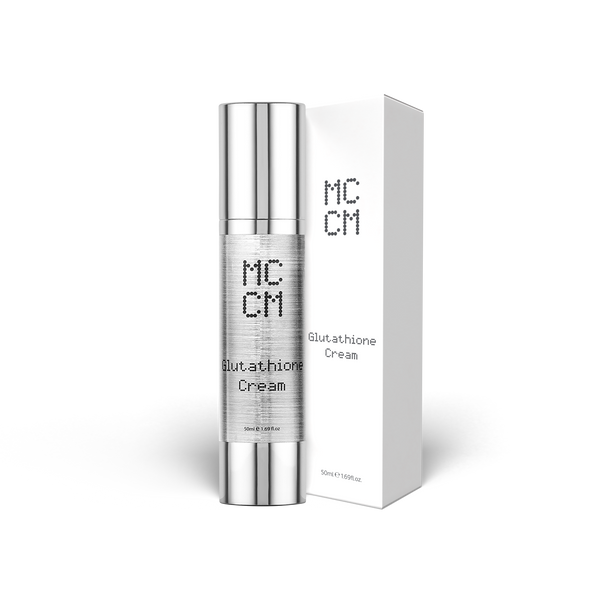
- Glutathione. A small peptide made of three amino acids, which occurs naturally in the body, as in Glutathione Cream.
- Deoxyribonucleic Acid. Better known as DNA. PDRN, short for polydeoxyribonucleotide, is the name given to its fragments. It appears in Exosome PDRN.
- Salicylic Acid. A beta hydroxy acid, known as BHA, as in Salicylic Removing.
- Glycolic Acid. The smallest alpha hydroxy acid, or AHA, which occurs naturally in sugar cane, as in Purifying Cream.
- Caffeine. The compound that occurs naturally in coffee beans and tea leaves, as in Hyaluro Cream.
- Urea. Found among the key ingredients of the three sun creams.
Key ingredients on our product pages
On every product page, the Key ingredients section lists the main ingredients of that product by their INCI name, with a short note on what each one is. It is a selection, not the full list. The complete INCI list is always printed on the pack, and that is the one to check if you are looking for a particular ingredient or want to avoid one.
Frequently asked questions
Is the first ingredient on the list the most important one?
It is the one present in the largest amount when the formula is made. The order says nothing else about an ingredient.
Why are some names in Latin?
Plant ingredients use their Latin botanical name, so they are the same in every country.
Where is the full ingredient list of a product?
On the pack. Our product pages show the key ingredients.
Can I ask about a specific ingredient before ordering?
Yes. Write to us from our contact page with the product and the ingredient.


